Ultimate Guide to Cryptocurrency Transactions
Aug 26, 2025
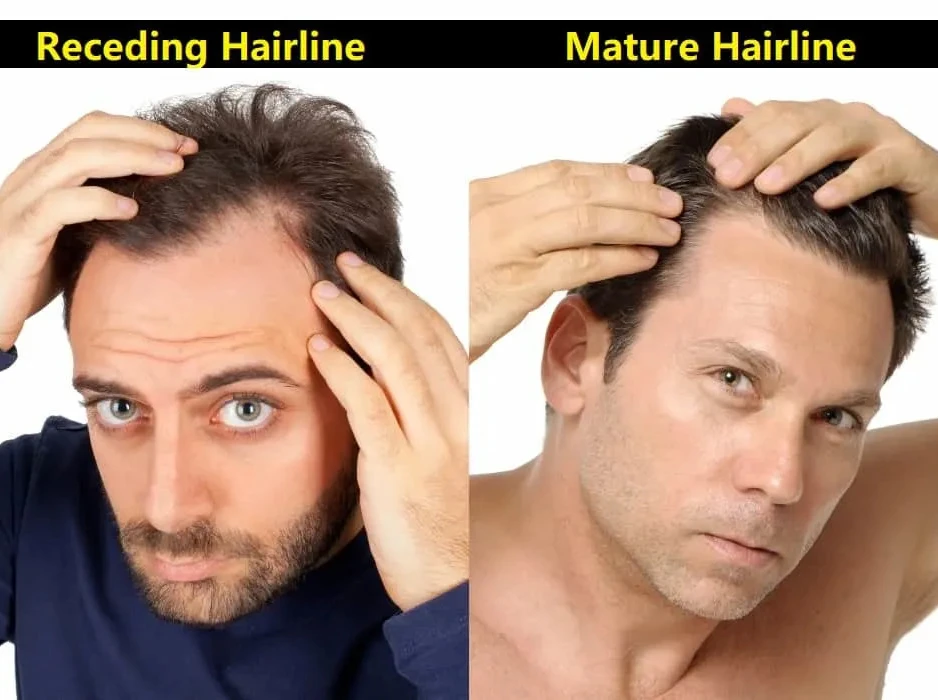
You might have stood in front of a mirror. You may have noticed a change in your hairline. Your forehead might look a little bigger. Or your hairline might not be straight anymore. This sight can create a feeling of worry in anyone. Questions start to form in your mind. "Is my hair falling out?" "Is this a normal sign of aging? Or is it the start of baldness?" Not understanding the difference between these two can cause unnecessary stress. Some people worry for no reason. Others do not take caution when it is needed. In this discussion, we will explore this exact topic. We will explain the fundamental differences between a receding hairline and a mature hairline. We will show you how to tell them apart. We will also discuss how to cope with them or take action.
First, let us understand what a mature hairline is. The name itself gives a clear idea. It is a normal and common change. It happens when a boy becomes a man. In teenage years, a boy's hairline is often round. It sits quite low on the forehead. But when they reach the age of 17 to 29, a subtle change occurs. This change is due to hormones. The hairline moves back slightly. Usually, it moves back about half an inch to one inch. The hairline at the corners of the forehead moves up a little. This creates a slight 'M' shape. But this 'M' shape is not very deep or clear. It is a stable condition. This means once a mature hairline forms, it usually does not change much. It changes very slowly over time. You should not see it as a sign of baldness. Instead, you should see it as a symbol of manhood. Many smart and attractive men have this type of hairline. It adds a different dimension to their face.
Now, let us talk about the receding hairline. This is not a normal change like a mature hairline. It is a major sign of hair loss. In medical terms, it is called Androgenetic Alopecia. It is also known as male pattern baldness. The main causes are genetics and hormones. In a man's body, the testosterone hormone creates a byproduct. This byproduct is called Dihydrotestosterone or DHT. Some people have hair follicles that are sensitive to DHT. This sensitivity is genetic. The DHT makes these follicles smaller. It slowly makes them inactive. As a result, the hair in that area becomes thinner. Eventually, it falls out completely. In a receding hairline, the process of the hairline moving back is very clear and continuous. Hair falls out at the corners of the forehead. This creates a deep and clear 'M' shape. Over time, this empty area becomes larger. Hair also starts to thin on the crown of the head. This process does not stop. It continues for years. It is not a single event. It is an ongoing process.
Now, let us look at some points to make the difference clearer. You can examine your own hair to understand these differences.
The easiest way to understand these differences is to look at your old photos. Compare a photo from five or ten years ago with a recent one. You will clearly see the change. If you see your hairline has moved back a little and stayed that way, you can relax. But if you see your forehead getting bigger or your hair getting thinner in the photos, you should be alert in time.
Now the question is, what can you do if you have a receding hairline? First of all, do not panic. Hair loss is not an unsolvable problem anymore. Medical science has brought many effective solutions. The first step is to consult a good dermatologist. A dermatologist is a skin and hair specialist. They can examine your hair's condition. They can determine the exact cause. They can guide you to the right treatment. There are two main types of popular treatments. The first is Minoxidil. It is a topical solution or foam. You apply it to your scalp. It increases blood flow to the hair follicles. This helps keep the follicles active. It reduces hair fall. The second and often more effective method is taking a medicine called Finasteride. It is an oral tablet. It works by reducing the production of the DHT hormone. It attacks the root cause of hair loss. But you must use it only with a doctor's advice and supervision. This is because it can have some side effects. Besides these, there are other modern methods. These include hair transplant, microneedling, and laser therapy. Doctors may recommend these based on the patient's condition.
On the other hand, if you realize you have a mature hairline, you should try to embrace it. It can become a part of your personality. You can choose a hairstyle that suits your new hairline. For example, you can style your hair a bit longer at the front. This can partially cover your forehead. It brings balance to your face. Many fashion-conscious people use their mature hairline as a style statement. There is no reason to feel bad about it. You should not see it as an ugly sign of loss.
In conclusion, hair is an important part of our personality. But it does not define our identity. Whether you have a receding hairline or a mature hairline, the biggest thing is your self-confidence. It is about how you see yourself. Instead of worrying needlessly about hair changes, it is important to make decisions based on correct information. If you feel you have a hair loss problem, see a specialist in time. And if it is a sign of maturity, accept it. Find new ways to present yourself. Remember, true beauty and attraction are not in the density of your hair. They lie in your character, your confidence, and your personality. With the right knowledge and a positive mindset, you can easily manage any change in your hair.

Aug 26, 2025

Aug 26, 2025

Aug 26, 2025

Aug 25, 2025

Jun 28, 2025 13681
Jun 16, 2025 1126

Jun 10, 2025 995

Feb 09, 2025 994

Jun 28, 2025 992