Ultimate Guide to Cryptocurrency Transactions
Aug 26, 2025
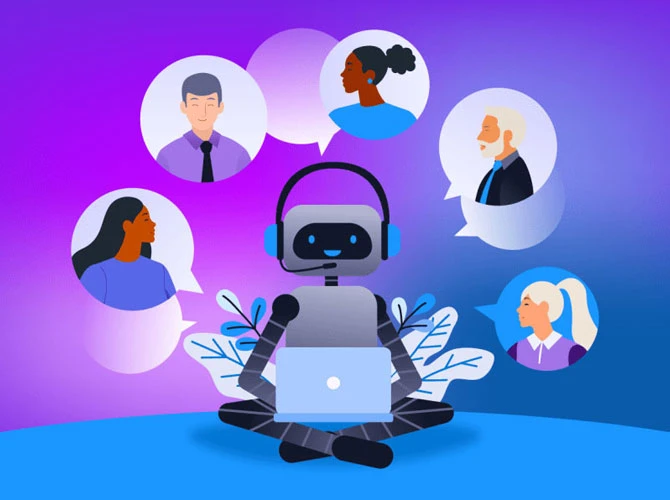
Have you ever visited a website? A small box suddenly appears in the corner. It starts talking to you. It might say, "You can ask me anything" or "How can I help you?". This small digital helper is called a chatbot. Today, we interact with them almost every day. But have you ever wondered what a chatbot really is? And how does it, with artificial intelligence or AI, make our lives so much easier? In this discussion, we will explore the world of chatbots. This will help you get familiar with this amazing technology. You will also understand how it is becoming an essential part of our daily lives.
So, what is a chatbot? The answer is not very complex. In simple words, a chatbot is a computer program. It can communicate with people through conversation or chat. You can think of it as a virtual assistant or a digital clerk. It automatically performs specific tasks. The earliest chatbots were very simple. They worked based on a set of pre-defined rules or scripts. This means if you asked a specific question, it would give a pre-programmed specific answer. For example, if you asked, "What is your name?", it would reply, "My name is XYZ." But if you asked the question a little differently, like "What can I call you?", this type of chatbot might not understand. It would say, "I did not understand." These are called rule-based chatbots.
But technology is constantly improving. The world of chatbots has also seen a revolution. We are now living in the era of AI chatbots. These chatbots no longer rely on simple rules. They use advanced technologies like artificial intelligence, especially machine learning and Natural Language Processing (NLP). As a result, they can understand human language, grasp the context, and even learn from past conversations to give new answers. When you talk to an AI chatbot, it feels like you are talking to a real person. They try to understand the meaning of your question. They catch the tone of your language. They even search for information if needed to provide the correct answer. It is this ability to learn that makes AI chatbots smarter every day. And they are making our lives much easier.
Now, let's come to the main question. How do these AI chatbots make our lives easier? The answer is spread across many levels. From our personal lives to business, education, and healthcare, AI chatbots play an active role in almost every field.
AI chatbots have brought a revolution in customer service. In the past, to know about a product or service, we had to call and wait in a customer care executive's line. Often, even after a long wait, there was a risk of not getting the right solution. But now, AI chatbots have solved that problem. They work 24 hours a day, 7 days a week without a break. You can ask a question from anywhere, at any time, and get an instant answer. For example, if you want to know the delivery status of a product on an e-commerce website, or if you want to know the rules for returning a product, a chatbot can give you the information in seconds. This saves the customer's time, reduces frustration, and improves the quality of service.
From a business perspective, the benefits of AI chatbots are undeniable. For a large organization, hiring many people for customer care is expensive. But an AI chatbot can talk to thousands of customers at the same time without any extra cost. This significantly reduces business expenses. Additionally, by answering common customer questions, chatbots reduce the workload on human employees. This allows human employees to focus on complex and important problems. Chatbots collect valuable data through conversations with customers. Analyzing this data makes it easier to formulate business strategies, develop new products, or create marketing strategies.
AI chatbots are also a common presence in our personal lives. The virtual assistants on our smartphones are actually advanced AI chatbots. You can tell it, "Wake me up at 7 AM tomorrow" or "What is the weather like today?". It will immediately execute the command or give you the answer. You can even ask, "Find a good restaurant near me," and it will present the best options based on your location. These assistants help us read emails, send messages, set meetings in our calendar, play music, and much more. As a result, we spend less time on small daily tasks and can focus more on important work.
The role of AI chatbots in education is also becoming increasingly popular. Students face various kinds of questions in their studies. It is not always easy to find the answers to those questions. And it is not always possible to get help from a teacher. In this case, an AI chatbot can act like a personal tutor. Students can ask questions on any subject, and the chatbot can provide detailed answers. They can even solve complex math problems, explain historical events, or give simple explanations of scientific concepts. They can provide personalized learning materials and exercises based on each student's learning pace. This helps improve the quality of education. Furthermore, AI chatbots are very effective for language learning. They can converse with students in a specific language, correct their mistakes, and help improve their language skills.
The use of AI chatbots is also growing in the healthcare sector. Of course, a chatbot can never replace a doctor's advice. But they can play a big role in primary healthcare. For example, if someone wants to know about the initial symptoms of a disease, they can get information from a chatbot. Based on the user's symptoms, the chatbot can point out potential health issues. It can also advise the user to see a doctor if necessary. Additionally, tasks like booking appointments at hospitals or clinics, reminding patients to take their medicine, or providing awareness information about specific diseases can be easily done through chatbots. This makes it easier for people to access health information. They become more aware.
The benefits of AI chatbots are not limited to these. In the banking and financial sector, they help customers check their account balance, view transaction history, pay bills, or apply for a loan. In the travel industry, they assist with booking flight tickets, reserving hotels, and providing information about tourist destinations. In the retail sector, they offer personalized product recommendations to customers. In short, wherever there is a need for instant communication, information delivery, and task automation, AI chatbots are making their mark.
However, it is also important to acknowledge the limitations of AI chatbots. They are not perfect. Sometimes they may fail to understand complex emotions or very specific queries. The issue of data privacy is also a major concern. Since chatbots collect a lot of user data, it is crucial to ensure that this data is kept secure and used ethically. Furthermore, over-reliance on this technology can reduce human interaction, which is not always desirable. Therefore, while enjoying the benefits of chatbots, we must also be aware of their challenges.
In conclusion, AI chatbots are no longer a thing of science fiction. They are a reality of our present and a significant part of our future. They have changed the way we communicate, do business, learn, and manage our daily lives. By providing instant support, automating tasks, and offering personalized experiences, they are truly making our lives easier and more efficient. As technology continues to advance, we can expect AI chatbots to become even more intelligent and integrated into our lives. They will not replace humans, but they will act as powerful assistants, freeing up our time to focus on creativity, innovation, and human connection. The journey of chatbots has just begun, and the future holds endless possibilities.

Aug 26, 2025

Aug 26, 2025

Aug 26, 2025

Aug 25, 2025

Jun 28, 2025 13681

Jun 16, 2025 1127

Jun 10, 2025 995

Feb 09, 2025 994
Jun 28, 2025 992